
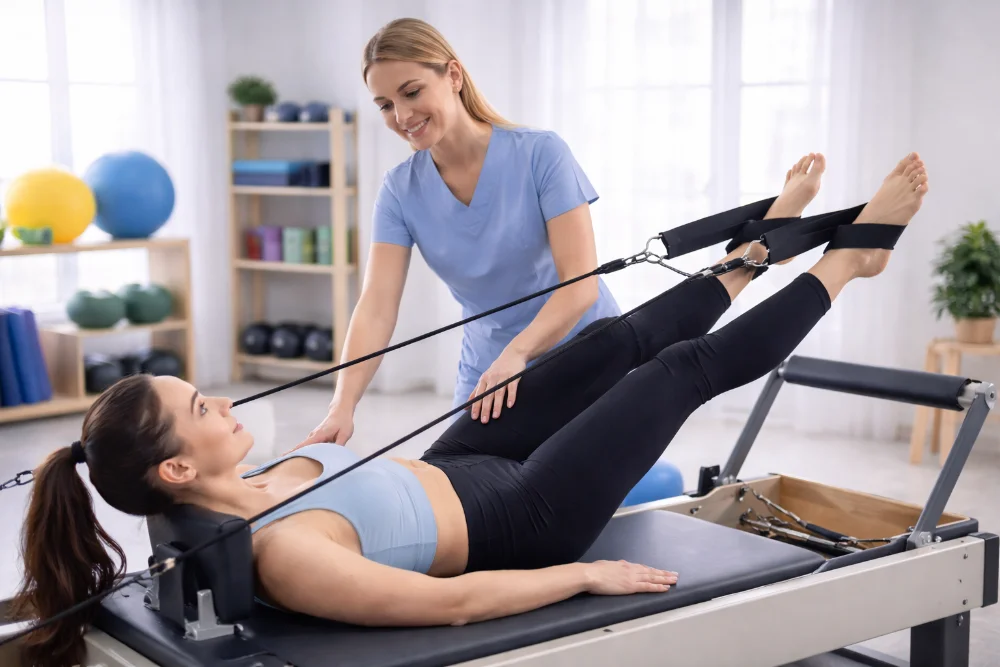
Clinical Pilates is commonly used in rehabilitation because it combines controlled strengthening, flexibility, and movement awareness. Exercises are low impact and can be modified to suit different abilities, pain levels, and stages of recovery.
Your physiotherapist guides you through exercises at a level that feels safe and appropriate, helping you understand how movement relates to your pain and how to exercise with confidence.
At BodySense Physiotherapy, Clinical Pilates is delivered as a form of physiotherapy-guided exercise, grounded in assessment and tailored to your individual needs. Physical activity and exercise play an important role in supporting health, wellbeing, and function, particularly for people living with chronic pain or movement limitations.
Clinical Pilates helps you build strength, improve posture, enhance flexibility, and develop better awareness of how you move, all within a controlled and supportive environment.
Clinical Pilates has been shown to be beneficial for many people with chronic pain and long-term health conditions, as well as those recovering from injury or surgery.
Clinical Pilates may be suitable if you are managing:
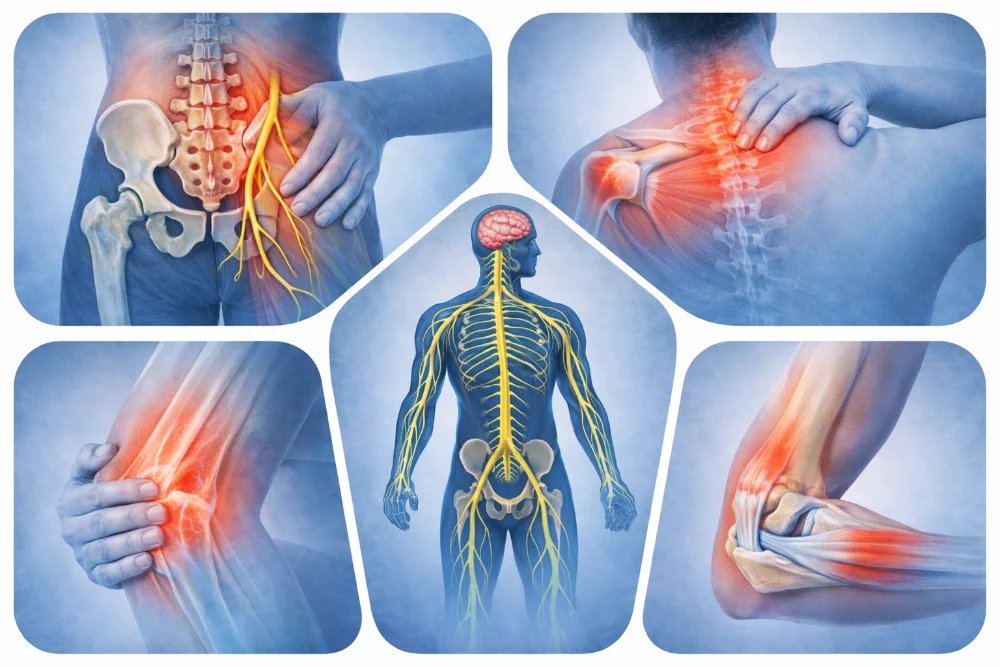
Gentle, controlled movement can help reduce pain sensitivity and support your body’s natural pain-relief processes.
Exercises target deep stabilising muscles and larger muscle groups to support safe, efficient movement.
Moving joints through controlled ranges can improve flexibility and confidence in movement.
Exercises can be performed on the mat or using equipment, with minimal impact on joints.
Clinical Pilates emphasises body awareness, helping you understand how you move and position your body.
Clinical Pilates may be delivered as mat-based exercise or using specialised equipment. Both approaches focus on controlled movement, strength, and coordination rather than high-intensity exercise.
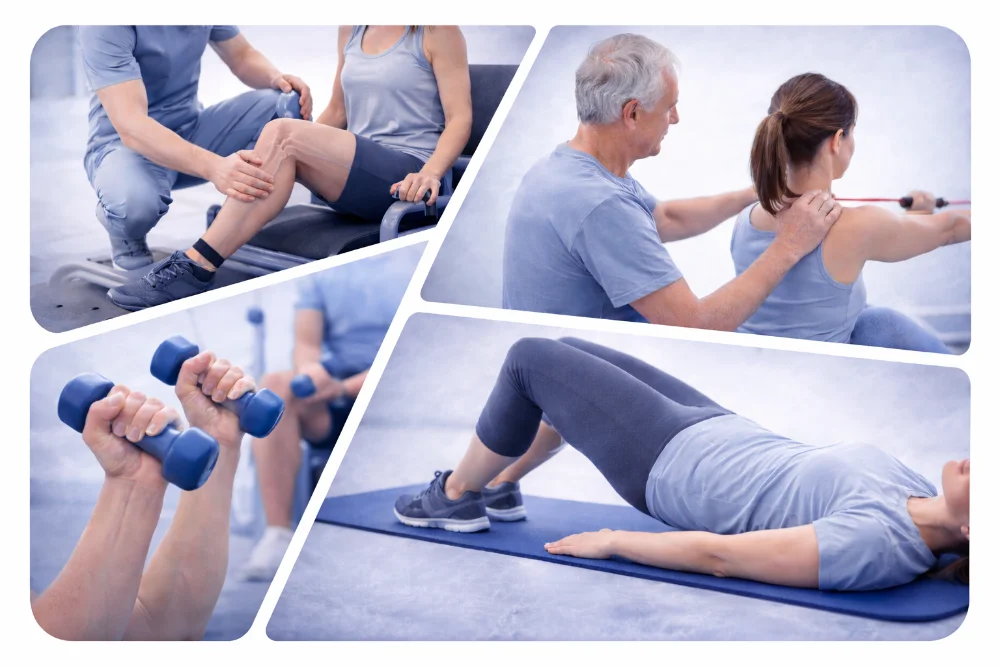
Before joining Clinical Pilates classes, we recommend a physiotherapy assessment. This allows your physiotherapist to understand your goals, medical history, and any injury or pain concerns.
During this assessment, exercises may be introduced, and expectations for classes are explained so you feel confident and prepared. Your program will then be monitored and progressed as you improve.
Pilates is a total body exercise that started about 100 years ago. The main purpose of this exercise was rehabilitation. Pilates is a low-impact exercise. It helps you to focus on strengthening muscles, improving posture and flexibility. Pilates offers many benefits no matter your fitness background.
Pilates as a physical activity uses a mind to body connection. It focuses on breathing with good movement control and flow. Both mat-work and reformer Pilates exercise classes are popular for this reason. They are both very effective for recovery from injury and as a general exercise for good health. So the question then is: “Which is the best option for me and my abilities – mat or equipment Pilates? Let us look at the two types of Pilates to take the guesswork out of choosing.
Before getting started, we recommend a 45-minute screening assessment by your physiotherapist. During this session, you have the opportunity to share your goals and ask any questions. Your physiotherapist will explain what to expect during the class. You will get the opportunity to go through the basic exercises that are part of the class. This will help you to enter the class feeling confident and prepared.
Both Mat and Equipment Pilates work on the concept of muscle control against gravity. It does not work to exhaustion where you lose control of how you are moving.
Mat-work classes teach you how to use the resistance of your own bodyweight. There are many exercise variations. There is also the ability to use small equipment such as weights, bands, and Pilates balls. The equipment has the ability to complement, change or challenge the movements performed.
Equipment pilates involves the use of many different pieces of equipment. To name a few – Reformers, Cadillac tables, Wunda chairs, ladder barrels, and so forth. The reformer machine has a carriage that slides forward and backward. Pulleys and springs underneath the carriage create resistance and challenge the body movements.
In both types of Pilates, the goal is to build strength with control. We encourage you to take your time with each exercise, focus on the task at hand and connect to your breath.
If you are a newbie, mat Pilates is an excellent starting point. Mat work is a great option for beginners. You learn how to control your muscles during exercises. Once you are confident with the exercises, you can do them almost anywhere!
As your control develops, reformer classes are an excellent progression. Equipment can be daunting; it is advisable to take part in a few one on one sessions. This would help to improve your confidence using the machine. The tailored feedback from the instructor is useful to help you get the most from your classes.
Pilates exercises are not considered to be high intensity. The slow and controlled nature of the movements challenges muscles all over your body. Even the muscles that usually don’t get much attention!
You may feel your muscles burn during the class (this tells you that you’re working hard). You might even experience some muscle soreness the following day. As you become more familiar with the movements, the soreness after exercise will ease.
Open communication with your physiotherapist is essential. It would be best to remain comfortable throughout the workout(even when you are working hard!). It also helps the instructor to know when your exercise needs a modification to suit your needs.

We’re now welcoming patients at Pier Street Medical, right next to HBF Park.